12 Facts About the Phillip Island Penguin Parade That Will Surprise You
Twelve things about the colony, the beach and the evening that surprise almost everybody — including the fact that the beach used to be a housing estate.
The short answer
The Summerland Peninsula was a subdivision until the Victorian Government bought back all 774 allotments between 1985 and June 2010. The colony has since grown from about 12,000 birds to an estimated 40,000, and the birds themselves are the smallest penguins in the world.
1. A housing estate used to stand on the beach
The Summerland Peninsula was subdivided for houses, on the exact ground the penguins nest in. From 1985 the Victorian Government began buying the allotments back one at a time, and the last of all 774 was purchased in June 2010. The roads were closed, the houses came out, and the burrows spread into what had been front gardens.
2. The colony has more than tripled
In the mid-1980s the peninsula held about 12,000 little penguins and the number was falling. Today the estimate is around 40,000. The recovery is the direct result of taking the estate off the peninsula, and it is why there is a parade to watch at all.
| The little penguin | |
|---|---|
| Height | About that of a bowling pin |
| Weight | Just under a kilogram |
| Dives per day | 1,300 to 2,000 |
| Deepest dive recorded | 72 metres |
| Longest dive recorded | 114 seconds |
| Top swimming speed recorded | 12 km/h |
| Colony, mid-1980s | About 12,000 |
| Colony today | An estimated 40,000 |
3. They are the smallest penguins in the world
A little penguin stands about as tall as a bowling pin and weighs just under a kilogram. Almost every visitor says the same thing on the way out, which is that they had no idea the birds were that small.
4. One of them dived 72 metres
These birds spend the daylight hours at sea, diving between 1,300 and 2,000 times a day, usually to ten or thirty metres. The deepest dive the reserve has recorded is 72 metres, and the longest lasted 114 seconds.
5. The camera ban is about eyesight, not copyright
There is strictly no photography or filming after sunset, and the reason is biological. A penguin's eyes are built for a dark beach, and a sudden flash or an unusual light frightens and disorientates it. The rule protects the behaviour the whole evening depends on.
Did you know? The ban is also why they come ashore late. Crossing an open beach in daylight makes a bird the length of your forearm an easy target, so they wait for the light to go and cross in groups.
6. There is no start time, and there never has been
The parade follows the sun, not a clock. Across the year the crossing moves from about 5:15pm in June to about 8:45pm in January — three and a half hours of difference, and the reason the arrival-times page is the first thing to check.
7. The parks close before the penguins arrive
The Koala Conservation Reserve takes its last entry at 4.30pm and Churchill Island at 4pm. In winter, when the birds are ashore by a quarter past five, the two halves of a Phillip Island day barely overlap. Things to do near the parade sets out how to fit them.
8. The Nobbies Centre is shut
Plenty of tour listings still sell a stop at the Nobbies Centre. The building, its cafe and its toilets are closed while the reserve works through the Summerland Peninsula Master Plan, and no reopening date has been published. The boardwalks and the car park are open as normal, and they are the reason to go.
9. Every ticket funds the conservation work
Phillip Island Nature Parks was established in 1996 and is a not-for-profit body. Admission pays for the habitat rehabilitation on the peninsula and the research programme that produced the diving figures above.
10. Moonlit Sanctuary is not on Phillip Island
Several coach days include Moonlit Sanctuary, and it is well worth the stop, but it sits at Pearcedale on the mainland, about halfway down. If your day includes it, the wildlife half happens before you cross the bridge.
11. No bus goes to the Penguin Parade
The V/Line coach from Melbourne reaches Cowes, twelve kilometres short, and there are no return buses to Melbourne once the parade is over. It is the single most consequential fact about visiting, and getting there covers what to do about it.
11b. The reserve runs three parks, not one
Phillip Island Nature Parks manages the Penguin Parade, the Koala Conservation Reserve and Churchill Island Heritage Farm, plus the free boardwalks at The Nobbies and 42 kilometres of walking tracks. A 3 Parks Pass bundles the three ticketed sites at a discount. Most visitors book the penguins and never learn the rest exists, which is a shame if you have driven two hours to get there.
If you are staying a night you can reasonably do all three, because the two daytime parks close in the late afternoon and leave the evening free. If you are on a coach day you will get whichever one your fare includes, so check before you book.
11c. You are watching a research site as well as a show
The figures in the table above — the dive depths, the durations, the speeds — come from long-running research on this colony rather than from penguins in general. That work is funded by the tickets, which means the evening you are watching also pays for the reason anybody knows how deep a little penguin dives.
It is worth a thought while you wait. You are sitting on a beach that was bought back house by house, watching a colony that has more than tripled, in a reserve that measured it happening.
12. The quiet nights are not a fault
During the moult each adult replaces every feather it owns, and a half-changed coat is not waterproof, so the birds sit the change out ashore instead of fishing. A thin crossing in March is the colony behaving exactly as it should.
- Busiest: the breeding season, August to February.
- Thinnest: the moult, from about February into March.
- Most predictable: spring, when both parents are running food to chicks.
Phillip Island day tours run in every one of those months, and Phillip Island Penguin Parade Tours lists what each fare covers. The biology behind the calendar is on the little penguins.
Frequently asked questions
How many penguins live on Phillip Island?
Why can't you take photographs?
Are the penguins there all year?
Is the colony still growing?
Tours that take the whole story in
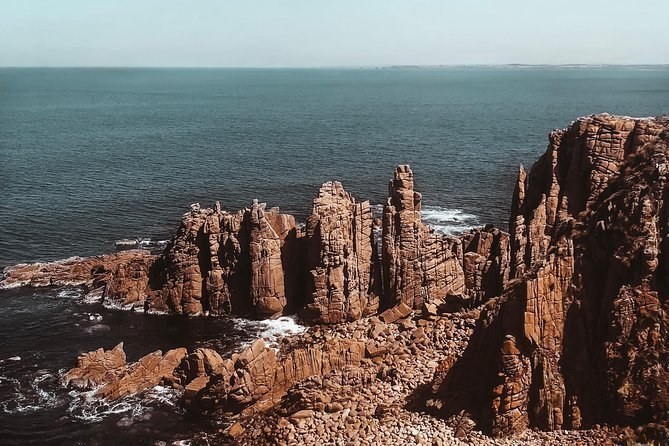
Small Group Phillip Island Penguins & Hiking Tour (4–11 guests)
A guided circuit walk on Cape Woolamai, the koala reserve and the crossing, capped at eleven travellers.
From $203 per person
Check Availability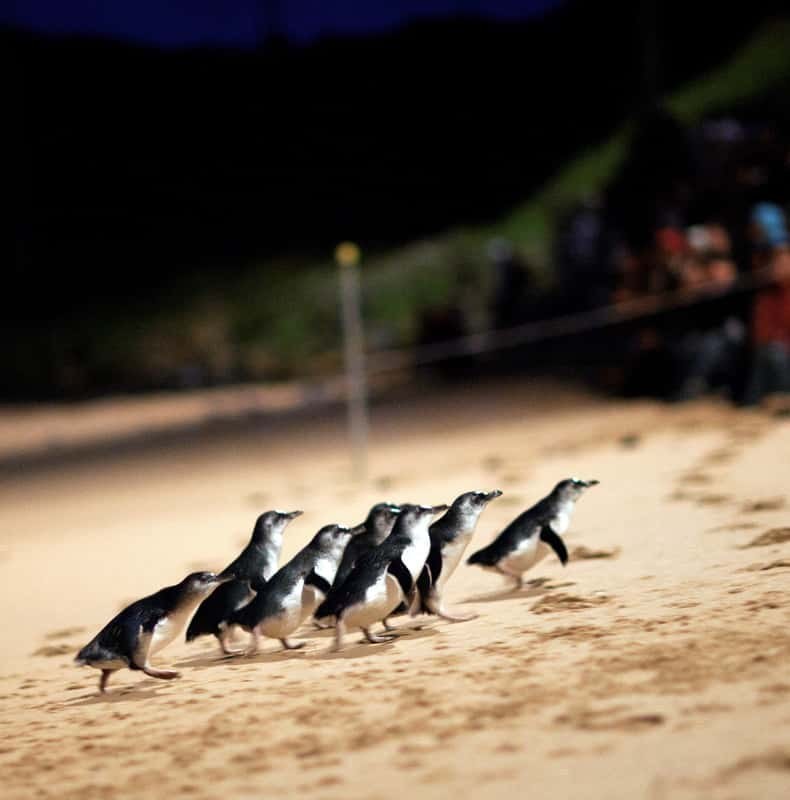
Phillip Island Penguin Parade: General Viewing Ticket
The reserve's own ticket, with the Visitor Centre displays and the boardwalks included from midday.
From $24 per person
Check AvailabilityThe other thing worth knowing before you book is the clock: how the timings work with children lays out the evening hour by hour.