Phillip Island Penguin Parade vs the St Kilda Penguins: Which Should You Do?
Two colonies of the same species, and two completely different evenings. Here is what each one costs you in time, money and travel — and when to do both.
The short answer
St Kilda is free, close and small: a handful of birds among the rocks of a breakwater. Phillip Island is ticketed, two hours away, and a mass crossing of an open beach. If you have one evening and no car, St Kilda wins on logistics; if you have a day, the island wins on everything else.
The short version: they are not the same evening
Both are colonies of the same species. That is where the similarity ends. St Kilda is a small urban colony living in the rocks of a breakwater at the end of a pier, twenty minutes from the middle of Melbourne, free to walk up to. Phillip Island is tens of thousands of birds crossing an open beach at dusk, two hours away, ticketed and managed.
One is a walk after dinner. The other is a day out. Choosing between them is really choosing how much of your trip you want to spend.
| Phillip Island Penguin Parade | St Kilda breakwater | |
|---|---|---|
| Distance from the Melbourne CBD | About 140 km | About 6 km |
| Getting there | Car or tour; no bus reaches it | Tram, then a walk along the pier |
| Cost | From A$34 at the gate | Free to view |
| Colony size | An estimated 40,000 birds | A small urban colony |
| What you watch | A mass crossing of an open beach at dusk | A handful of birds among the rocks |
| Facilities | Visitor Centre, cafe, seating, rangers | A public pier |
| Time needed | A half or full day | An evening walk |
| Photography | Not permitted after sunset | No flash, no torches |
The case for St Kilda
It is free, it is close, and you can do it on a whim. Take the tram down to the foreshore, walk out along the pier, and look into the rocks of the breakwater at dusk. Phillip Island Nature Parks runs guided sessions there too, with rangers on hand to explain what you are looking at.
If you have one evening in Melbourne, no car, and no appetite for four hours of driving, this is a real answer rather than a consolation prize. You will see little penguins. You will just see a few of them, among rocks, rather than a crossing.
Useful tip. The same rules apply at both: no flash photography and no torches. A penguin's eyes are the reason, whichever colony you are standing at.
The case for Phillip Island
Scale, and the behaviour that comes with it. On the Summerland Peninsula the birds come out of the surf in groups, gather on the sand, and cross together while several hundred people watch from stands built for it. Then they keep walking, up under the boardwalks, past you, towards burrows in the dunes.
You also get the rest of the island: koalas at eye level on treetop boardwalks, the cliffs and boardwalks at The Nobbies, a working heritage farm, and a coastline that is worth the drive on its own. Things to do near the parade covers what fits before dusk.
What it costs you in time
- St Kilda: an hour or two, from a tram stop.
- Phillip Island by car: two hours each way plus about three hours at the reserve, so a half day at the very least.
- Phillip Island by tour: eight to fourteen hours door to door, which is the whole day and the whole evening.
That last line is the honest reckoning. A full-day coach is not a transfer with a view; it is the day. Which is fine if the day is what you wanted, and a poor trade if you only wanted the birds.
Can you do both?
Easily, and they complement each other. St Kilda on a free evening costs you nothing and shows you the species up close in an unlikely setting. Phillip Island on another day shows you what a colony of forty thousand looks like when it comes home.
If you only have one evening and you want the crossing, the deciding factor is transport. There is no bus to the Penguin Parade and no coach back to Melbourne afterwards, so without a car it is a tour or it is St Kilda — getting there sets out every route there is.
What a Phillip Island day gives you that an evening cannot
If you are weighing four hours of driving against a tram ride, the honest comparison is not penguins against penguins. It is one evening against one day. The island is 100 square kilometres of coastline, and the crossing is the last two hours of it.
In the daylight you get koalas on treetop boardwalks built at the height they sit at, a working heritage farm on its own small island, the granite stacks at Cape Woolamai, and boardwalks at The Nobbies above a fur seal colony. A coach day packages two or three of those with the crossing; a car lets you pick your own.
That is the case for the drive, and it is a strong one. It is also why the decision comes down to how many days you have in Victoria rather than to which colony is better.
The verdict, by traveller
- One night in Melbourne, no car: St Kilda, or a coach day if you can spare the whole day.
- A week in Victoria: Phillip Island, without hesitation.
- Travelling with young children: St Kilda in summer, when the island crossing starts near nine; Phillip Island in winter, when it is over by six.
- Here for the wildlife: Phillip Island, and pay for the closer viewing platform.
- On a tight budget: St Kilda is free; the island's own ticket is $24 if you can drive yourself.
Phillip Island Penguin Parade Tours compares every fare that solves the transport half, from the reserve's own ticket up to a private car for your group alone.
Frequently asked questions
Are the St Kilda penguins the same species?
Do I need a ticket for St Kilda?
Can I get to Phillip Island without a car?
Which one is better for photographs?
Tours that solve the two-hour problem
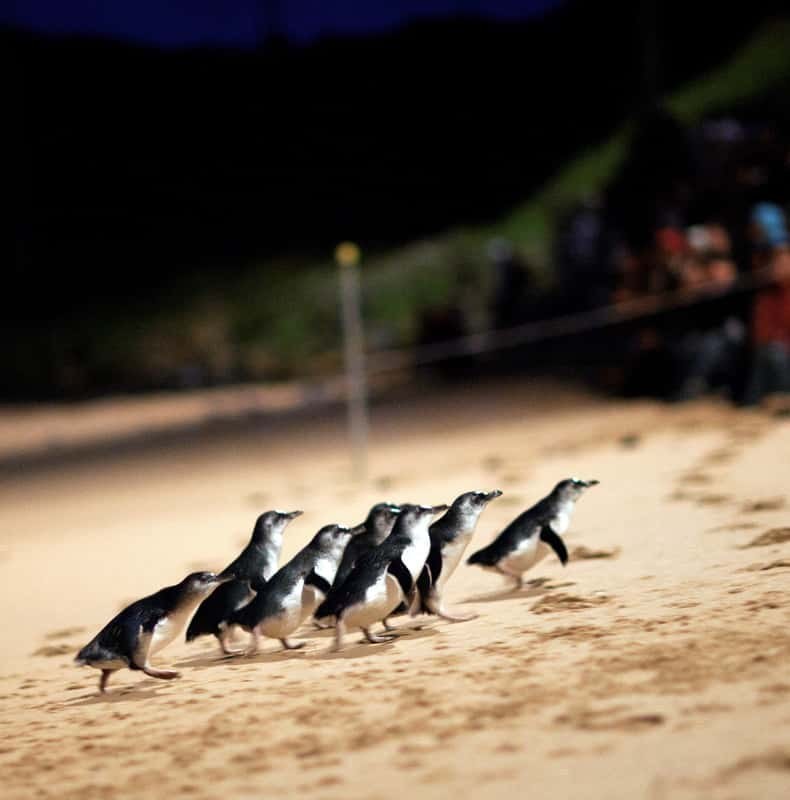
Phillip Island Penguin Parade: General Viewing Ticket
Admission on its own, for anyone with a car or a bed on the island.
From $24 per person
Check Availability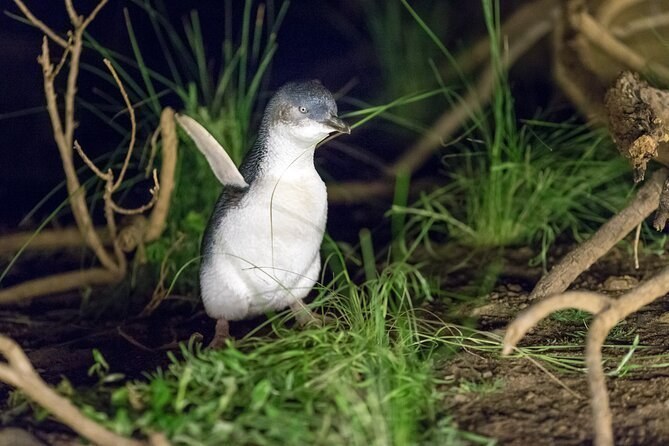
Phillip Island Penguin Parade and Koalas Tour from Melbourne
A coach day with the koala reserve and general viewing, at the cheaper end of the full-day fares.
From $131 per person
Check Availability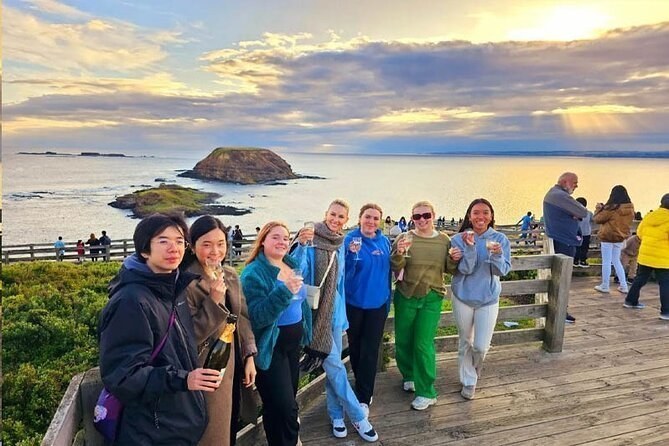
Phillip Island: Golden Hour Penguin Express Tour with Island Pickup
The one tour that never leaves the island, picking up from Phillip Island and San Remo accommodation.
From $94 per person
Check AvailabilityStill weighing it up? The full visitor guide sets out the whole evening, start to finish.