Choosing a Phillip Island Penguin Parade Tour from Melbourne
Every tour here ends at the same beach at the same moment. What you are actually choosing between is the eleven hours around it — and one line on the listing that almost nobody reads.
What actually differs between these tours
Every tour on this coast ends in the same place at the same moment: Summerland Beach, at dusk, watching the same colony come ashore. Nobody has a better beach and nobody has an earlier crossing. So the question is never which tour sees the penguins. It is what happens in the eleven hours around them.
Four things separate the fares, and they are worth naming before any price is compared: where the day starts, how long it runs, how many people are on the vehicle, and which viewing area your ticket buys at the gate. The last of those is the one almost nobody checks, and it is the one that changes the evening most.
| Format | Typical day | Group | What it adds in daylight | Fares from |
|---|---|---|---|---|
| The reserve's ticket | About 3 hours at the reserve | You alone | Nothing — you build the day | $24 |
| Afternoon coach | 8–10 hours | Up to 24 | The Nobbies, sometimes Cowes | $95 |
| Full-day coach | 9–14 hours | Up to 39 | A wildlife park, the coast, an hour in Cowes | $111 |
| Small-group minibus | 8–12 hours | 10–15 | The same stops, faster on and off | $123 |
| Private vehicle | 8–11 hours | Your party only | Whatever you ask for, at your own start time | $437 |
Do you need a tour at all?
If you have a car, no. The reserve sells its own general viewing ticket from $24, parking is free, and you can arrive when you like and leave when you like. Two hours down the M1 and the Bass Highway, twenty minutes past the bridge, and the evening is yours.
If you do not have a car, the answer is yes, and not as a convenience. Phillip Island Nature Parks states that the V/Line coach does not go to the Penguin Parade and that there are no return buses to Melbourne at the conclusion of it. The coach reaches Cowes, twelve kilometres short, and the last one leaves long before the birds do. There is no train, and the Stony Point ferry lands in the wrong town at the wrong hour.
That is the single fact that shapes this whole market. A tour here is the transport, and everything else in the fare is what the operator adds on top of solving it.
How long a day are you willing to give it?
Day length varies far more than price, and it is the first thing to decide.
- Afternoon tours, 8–10 hours. Leave the city early afternoon, one or two stops on the island, the crossing, and back. The shortest way to do it from Melbourne.
- Full days, 9–14 hours. A late-morning start, a wildlife park on the way down, the coast in the afternoon, then the crossing.
- Combination days, 11–17 hours. A steam railway or a city tour in the morning and the island in the evening. The most in one day, and the most demanding.
Work backwards from the arrival time in your month. In June the crossing is over by six and even a long tour has you home before nine. In January it starts at a quarter to nine, and a fourteen-hour day means leaving the reserve near eleven. The arrival-times page has the figure for every month.
How much does the group size matter?
More than most people expect, and not for the reason they expect. The caps on these tours run from ten to thirty-nine, and the difference is not comfort on the road. It is time: how long boarding takes at each stop, how long the group takes to reassemble at Cowes, and how long it takes to get out of a car park where everybody leaves at once.
A minibus capped at eleven is out of the reserve while a coach of thirty-eight is still counting heads. Over a twelve-hour day that is an hour of your life. The trade-off is price: the small-group fares sit above the coach fares almost without exception.
Useful tip. Watch for a listing that sells itself as a small-group experience while its own additional information caps the vehicle in the twenties. The cap is the fact; the adjective is marketing.
Which viewing area does the fare buy?
This is the part of the comparison that gets skipped, and it explains most of the price gaps on the page. The reserve sells four different places to watch from, and a tour fare buys exactly one of them.
General Viewing, the big tiered stands, is what almost every fare includes. Penguins Plus is a smaller elevated platform much closer in, and only one group coach here puts it in the price. Underground Viewing and the ranger-guided tours are booking options on a couple of the private days.
One operator proves the point twice over: two of its coach days run the identical itinerary in the identical vehicle, fifty-one US dollars apart, and the only difference is the seat. The viewing-tier guide sets out what each one shows you.
What a wildlife park adds, and where it actually is
Most full-day fares include a second gated attraction. They are not the same attraction, and one of them is not on the island.
- Koala Conservation Reserve. On Phillip Island, run by the same body as the Penguin Parade. Two treetop boardwalks built at the height koalas sit at.
- Moonlit Sanctuary. At Pearcedale on the mainland, roughly halfway down. A wider range of animals, hand-feeding, and a guided walk on most tours.
- Maru Koala and Animal Park. At Grantville on the mainland, on the Bass Highway.
All three are worth the stop. The distinction matters only if you were expecting the wildlife half to happen on the island, or if you have already booked the Koala Conservation Reserve separately.
Is hotel pickup worth paying for?
It is free on some fares and absent on others, and the difference is about an hour of your own logistics. A tour that collects from your hotel door removes a tram ride at the start and a walk back at eleven at night; a tour that meets at the Immigration Museum on Flinders Street asks you to get there yourself.
Neither is better. Hotel pickup means the coach works a circuit of pickups before it leaves the city, which adds time at the front of the day. A single meeting point leaves on schedule. If you are staying centrally, the meeting point is often quicker; if you are further out, pickup is worth real money.
When is a private tour the cheaper option?
Sooner than the headline fares suggest. The private days here run from $437 to $1,748 per person, which reads as out of reach — except that one of them is priced per group rather than per head, for up to seven travellers.
Do the arithmetic for a family of five. Five small-group seats at $179 each is $897. A per-group private fare of $1,174 for up to seven is more, but not by much, and it buys your own vehicle, your own start time and any viewing tier you care to pay for. At six or seven travellers the gap closes further.
The private tours page sets out which is which, because the pricing basis is not obvious from the listings.
What if you are already on Phillip Island?
Then almost none of the above applies. You are fifteen minutes from the reserve, so the ticket on its own is the obvious answer and it costs a fraction of a Melbourne fare.
There is one tour built for exactly this case: it collects from Phillip Island and San Remo accommodation rather than from the city, takes in The Nobbies and Cowes, and gets you to the crossing without a two-hour drive at either end. If you are staying on the island and want a guide rather than a map, that is the one to look at.
Reading a fare properly before you book
Five things to check on any listing, in this order.
- Which viewing area. If the listing does not say, assume general.
- The group cap. In the additional information, not the title.
- Where it starts. A hotel door, a street corner, or the island.
- Total hours. Against the arrival time for your month.
- The refund window. Most are 24 hours; two here are not.
Two fares sit outside the usual refund window. The reserve's own ticket cancels free with two days' notice rather than one, and one private day is sold non-refundable. Both say so on their own card, and the FAQs set out what that means in practice.
The shortlist, by traveller
If you want one line to act on:
- First visit, no car: a full-day coach with a wildlife park.
- Wildlife is the point: a fare that includes Penguins Plus.
- Travelling with children: an afternoon tour, or winter.
- Family of five or more: price the per-group private day.
- Driving anyway: the reserve's ticket, and nothing else.
- Staying on the island: the island-pickup tour, or the ticket.
Phillip Island penguin tours from Melbourne are listed on Phillip Island Penguin Parade Tours with the viewing area, the hours and the group cap on every card, which is the comparison this guide has been building towards.
Frequently asked questions
What is the cheapest way to see the Penguin Parade?
Do all tours include admission?
Is a small-group tour worth the extra?
How far ahead should I book?
Can I do this as a half day?
Three fares that answer three different questions
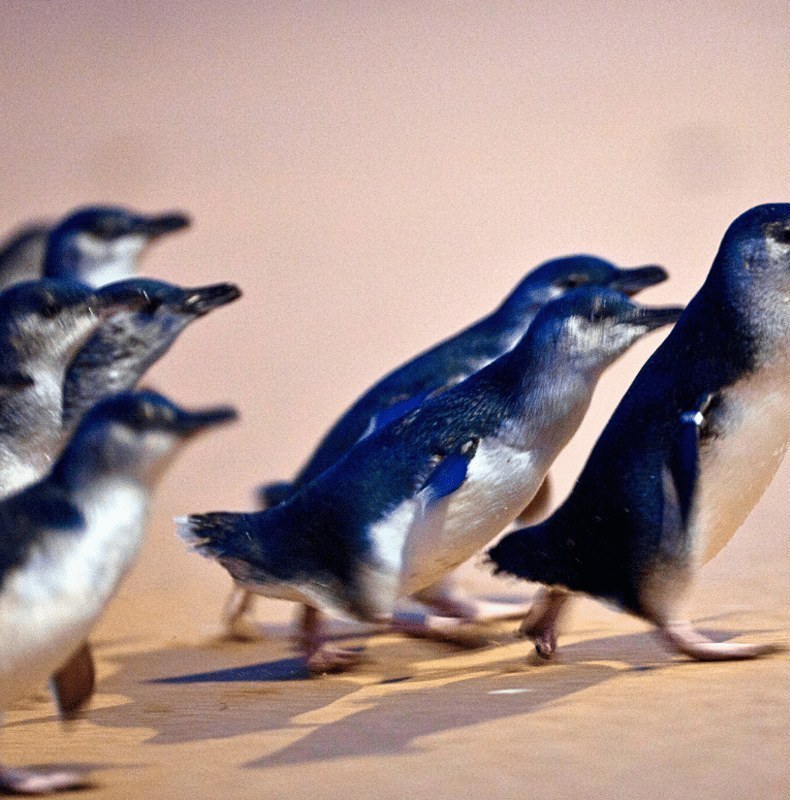
From Melbourne: Phillip Island Penguin Parade Eco Tour
The full-day default: hotel pickup, a wildlife park, the coast and standard viewing at the crossing.
From $111 per person
Check Availability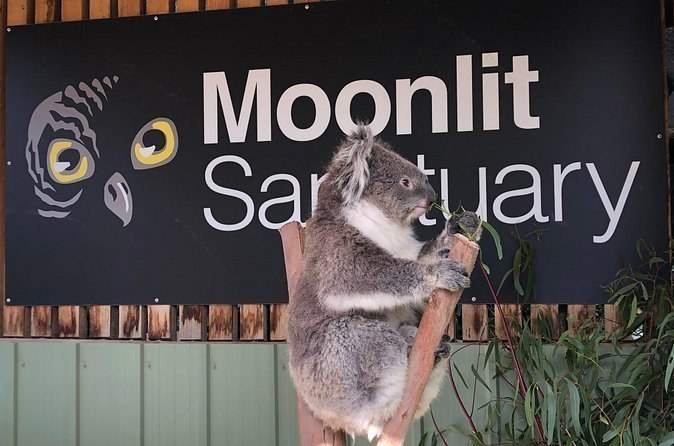
Small-Group Phillip Island Afternoon Day Trip from Melbourne
An afternoon rather than a full day, capped at eleven travellers, with pickup and drop-off in the city centre.
From $179 per person
Check Availability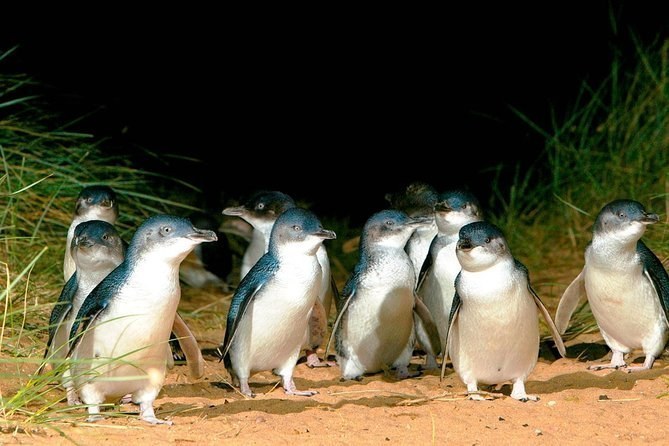
Phillip Island Penguins Private Adventure
Priced per group for up to seven, which is where a family of five stops paying by the head.
From $1,174 per group, up to 7
Check AvailabilityThe decision after this one is the seat rather than the vehicle: the viewing tiers explained sets out what each one costs and what it shows you.